hugh-baird-college-logo

Success Story

Erin, an 18-year-old Hugh Baird College student who lives with cerebral palsy, found the written demands of a traditional Level 2 diploma an overwhelming barrier. After moving to a project-based Level 2 qualification with Gateway Qualifications, she flourished, taking a leadership role on a project for a local care home, and in November 2024 she won the Federation of Awarding Bodies’ Learner of the Year Award.

If you support learners with additional needs who struggle with the written demands of traditional courses, get in touch.

Talk to Our Team

At a glance

Centre

Hugh Baird College, an FE college

Graduation cap icon representing academic achievement, qualifications, and progression.

Learner

Erin, an 18-year-old student living with cerebral palsy

Certificate icon with a ribbon representing qualifications, achievement, or certification

Qualification

A project-based Level 2 qualification

Lightbulb icon with a question mark representing a challenge or problem-solving

The challenge

A capable student overwhelmed by the written demands of a traditional Level 2 diploma

Document icon with a checkmark representing verification, approval, or completed documentation

The solution

A move to a hands-on, project-based Level 2 qualification built around a real community brief

Target icon with an arrow hitting the centre representing progress, goals, or results

The result

Erin led a care-home project, grew in confidence, and won the FAB Learner of the Year Award 2024

This Level 2 qualification was particularly suited to Erin's needs, allowing her to engage in practical, hands-on projects that were better aligned with her learning style and physical capabilities.
Tina Blease, the Curriculum Manager at Hugh Baird College

The challenge: barriers in a traditional, written-heavy course

Erin’s learning journey has been fraught with obstacles. Diagnosed with cerebral palsy, she faced significant barriers, particularly in traditional learning environments that impacted her performance.


Initially enrolled in a Level 2 NCFE Extended Diploma in Childcare, Erin struggled with the rigorous written demands of the course that soon became overwhelming, despite the study support provided by the college.


The physical challenges of her condition made assignment completion impossible, leading to considerable distress and her eventual request to reduce her qualification level.


Erin’s struggles were not limited to assignment challenges; the physical demands of her condition often left her feeling isolated and underserved by traditional learning models.


This period of her life was marked by frustration and a growing concern that she might not be able to reach her potential.

Hugh Baird College learner Erin sitting in a bright pink booth on campus.


How Hugh Baird College used a project-based qualification

Recognising the unique challenges Erin faced, Tina Blease, the Curriculum Manager at Hugh Baird College, proposed a shift to a Level 2 qualification with Gateway Qualifications, well-known for its flexibility and expertise in project-based learning. This qualification was particularly suited to Erin’s needs, allowing her to engage in practical, hands-on projects that were better aligned with her learning style and physical capabilities.

The core of this new curriculum involved a collaborative project with a local residential care home facing difficulties engaging its residents with dementia in meaningful activities. Erin and her peers were tasked with revamping the care home’s activity schedule. The project required students to integrate principles of occupational therapy and explore issues of equality and diversity, ensuring that all activities were accessible and enjoyable for residents with varying physical and cognitive abilities.


The results: Erin's personal growth and a national award

The shift to Gateway Qualifications positively impacted Erin. She absolutely flourished under the new, hands-on learning approach, that allowed her to develop critical leadership and problem-solving skills.


Taking a leadership role within the care home project, Erin was instrumental in researching, designing and implementing activities that significantly improved resident engagement. She expressed a newfound confidence and a deep sense of satisfaction with her ability to impact the lives of others, positively.


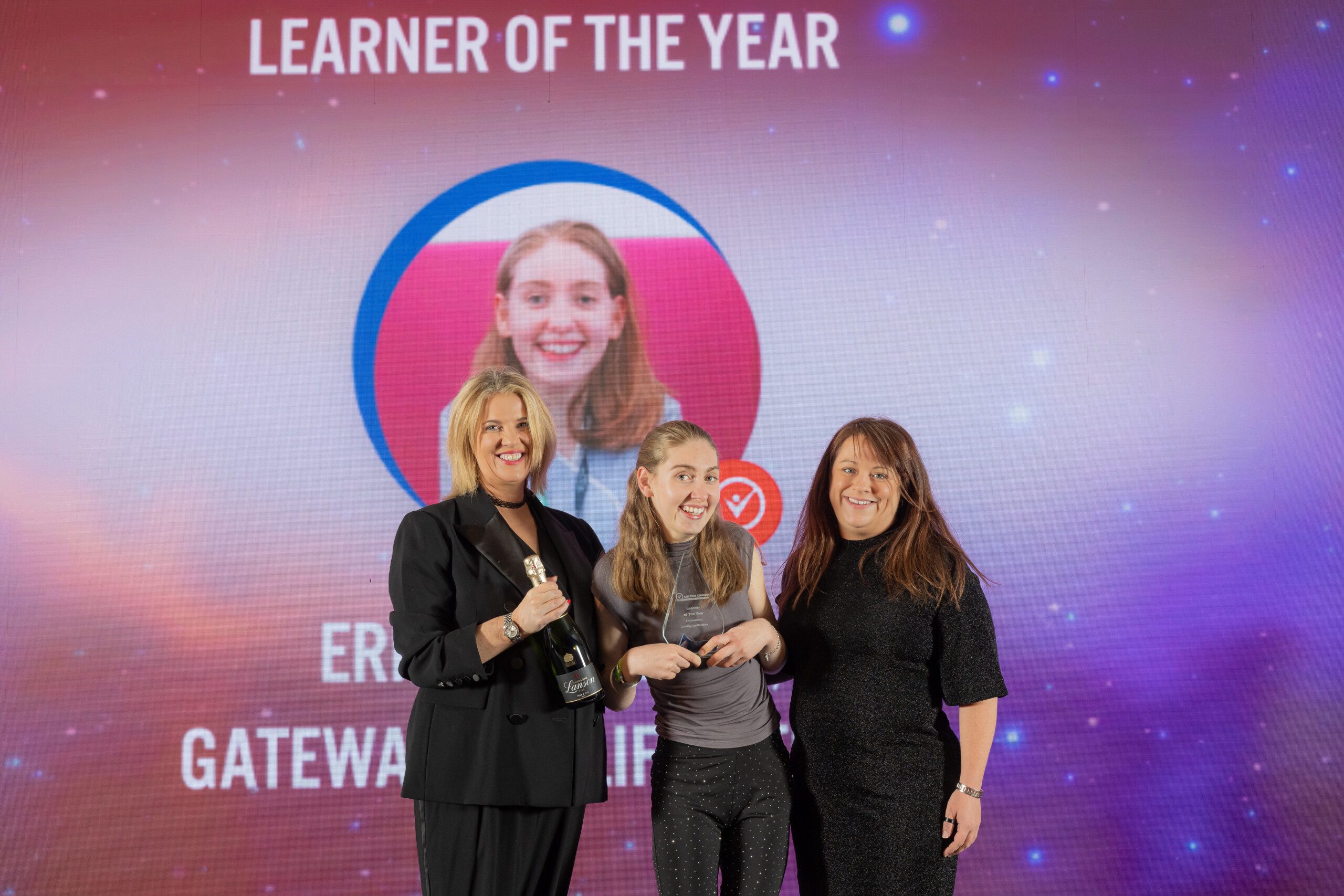
Her ability to influence the project’s direction and outcomes demonstrated both her significant personal growth and the effectiveness of flexible, learner-centred approaches. Erin’s enthusiasm and newfound confidence were evident as she spoke with pride about her contributions, which were showcased in a video presented during college-wide training sessions, inspiring other students and college staff alike. In November 2024, Erin won the Federation of Awarding Bodies’ Learner of the Year Award.


Encouraged by Erin’s success, Hugh Baird College plans to further integrate Gateway Qualifications across other areas. The project has encouraged a broader discussion around inclusivity and flexibility within further education and within the community. It has shown that with the right support and opportunities, students can overcome substantial obstacles and make a significant impact on society. The college also plans to expand its partnerships with local businesses and community organisations, providing real problems for students to help solve.

Group of three people on awards ceremony stage presenting the Learner of the Year Award

Winner's logo reading: Learner of the Year, FAB 2024 Awards, Award Winner


What this could mean for your learners

Erin’s story is remarkable; it demonstrates the real benefit of adapting learning strategies to meet diverse learner needs, creating an environment where every student can thrive. Erin’s experience highlights the importance of accessible, tailored learning, and through Gateway Qualifications, Hugh Baird College has set a precedent for supporting students with additional needs, proving that every student has untapped potential waiting to be realised.

The same is possible for very different learners, in very different settings. If you are supporting a learner whose potential is bigger than the format they are in, we’re here whenever you’d like to talk.